
ACL Injuries Are Ruining Careers: Why Modern Football Sees More Ligament Tears
December 16 2025 | Uncategorized
Modern football has never been faster, more intense, or more demanding on the human body. While the game has evolved tactically and commercially, the physical cost paid by players has increased dramatically. One of the clearest and most alarming trends is the growing number of anterior cruciate ligament (ACL) injuries, commonly referred to by fans as “cruciate ligament tears.” These injuries are no longer rare or shocking; they have become a recurring storyline across leagues, tournaments, and seasons. Careers are stalled, peak years are lost, and some players never fully return to their previous level.
This article explores why ACL injuries are becoming more common in contemporary football, examining physical, tactical, medical, and structural factors that together create a perfect storm for ligament damage.
The Physical Evolution of Football and Its Hidden Cost
Football today is a fundamentally different sport compared to even twenty years ago. Players cover more distance, perform more sprints, and execute more explosive movements per match. High-intensity actions such as sudden accelerations, decelerations, sharp cuts, and rapid changes of direction place enormous stress on the knee joint, particularly on the ACL, which stabilizes rotational movement.
Modern training methods emphasize athleticism alongside technique. Players are stronger, faster, and heavier, yet the pitch dimensions remain unchanged. This means collisions happen at higher speeds, and biomechanical loads on joints increase exponentially. The knee, as a central load-bearing joint, absorbs much of this stress, especially during non-contact situations such as landing awkwardly after a jump or pivoting under pressure.
Another factor is the year-round football calendar. Elite players rarely experience true rest. Domestic leagues, continental competitions, international tournaments, and commercial tours compress recovery time and accumulate fatigue. Fatigued muscles fail to protect ligaments adequately, increasing the likelihood of catastrophic injury.
Match Intensity, Pressing Systems, and Tactical Demands
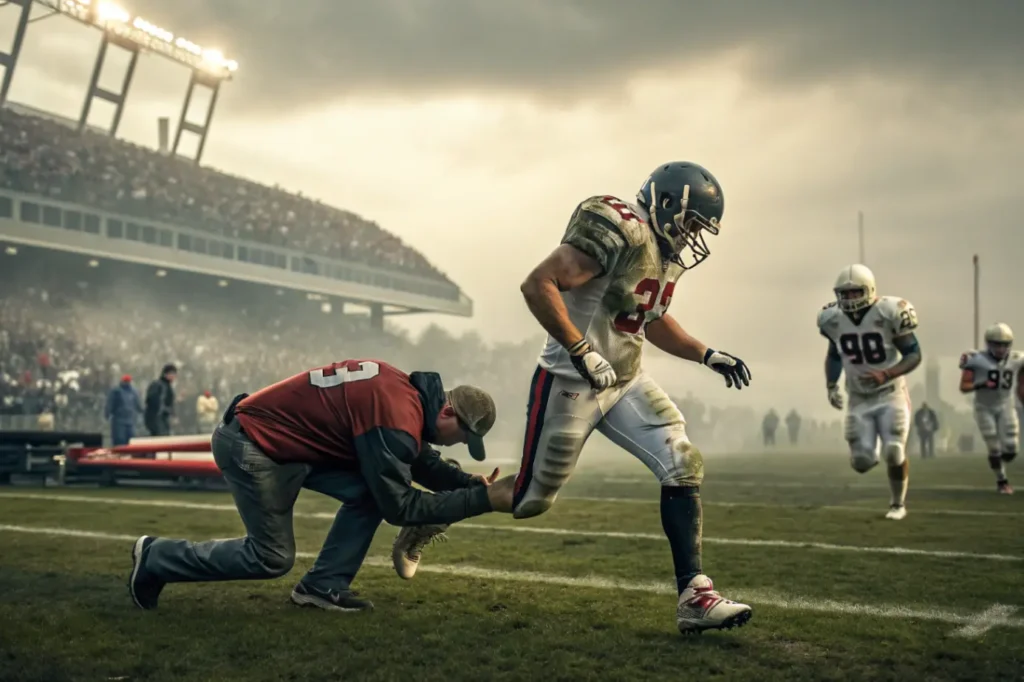
Tactical evolution has also played a significant role in the rise of ACL injuries. High-pressing systems demand constant explosive actions, short recovery windows, and repeated directional changes. Players are expected to react instantly, close spaces aggressively, and recover position at maximum speed.
These tactical requirements increase exposure to high-risk movements, particularly when combined with mental fatigue. Decision-making under pressure can lead to poor body positioning, unbalanced landings, or mistimed tackles. Even minor errors in foot placement or knee alignment can result in ligament failure when forces are extreme.
Full-backs and midfielders are especially vulnerable due to their hybrid roles. They sprint, defend, attack, and transition more than any other positions, often covering the most ground at the highest intensity. The cumulative load on their knees across a season is immense.
Playing Surfaces, Footwear, and Environmental Factors
While stadiums have improved visually, the relationship between playing surfaces and injury risk remains complex. Modern hybrid pitches combine natural and synthetic elements to withstand heavy usage, but they can also alter traction properties. Excessive grip between boot and turf increases rotational stress on the knee when the foot becomes “stuck” during a turn.
Boot design has similarly evolved, prioritizing speed and responsiveness. Lighter boots with aggressive studs enhance performance but may reduce margin for error. When combined with wet conditions or uneven pitch wear, these factors can significantly elevate ACL injury risk.
Environmental variables such as weather, match scheduling, and travel also play a role. Cold temperatures affect muscle elasticity, while long-haul travel disrupts neuromuscular coordination. These subtle factors compound over time, especially for players operating at the elite level week after week.
Medical Awareness, Diagnostics, and Statistical Visibility
Part of the perceived increase in ACL injuries is due to improved diagnostics and transparency. Injuries that may have been misdiagnosed or underreported in the past are now identified quickly using advanced imaging and biomechanical analysis. Clubs release detailed medical updates, and fans track recovery timelines closely.
However, this increased visibility does not fully explain the trend. Medical data consistently shows a real rise in serious knee injuries across top leagues. Clubs now invest heavily in sports science, but prevention has limits when structural demands exceed biological tolerance.
To better understand the scale of the issue, it is useful to look at comparative data across leagues and seasons.
Before examining the table below, it is important to note that reported ACL injuries typically include both match and training incidents and focus on first-team players.
| League | Average ACL Injuries per Season | Average Recovery Time |
|---|---|---|
| Premier League | 18–22 | 7–9 months |
| La Liga | 14–18 | 7–8 months |
| Serie A | 16–20 | 8–10 months |
| Bundesliga | 12–16 | 6–8 months |
| Ligue 1 | 13–17 | 7–9 months |
These figures highlight not only the frequency of ACL injuries but also their long-term impact. A recovery period of eight months often means missing an entire season’s rhythm, with lasting effects on performance, confidence, and market value even after return.
Player Development, Youth Load, and Early Specialization
Another critical factor lies in how players are developed from a young age. Early specialization has become the norm, with elite academies identifying talent earlier than ever. Young players train intensively, compete frequently, and face professional-level expectations before their bodies are fully matured.
This continuous load during growth phases can lead to muscular imbalances, improper movement patterns, and increased injury susceptibility later in their careers. ACL injuries often occur in players aged 20 to 26, precisely when early developmental stress begins to intersect with peak competitive demands.
Within this context, several interconnected risk factors repeatedly emerge, and understanding them helps explain why prevention remains so challenging:
- Chronic fatigue due to congested match calendars and limited rest.
- Repetitive high-intensity movements with insufficient neuromuscular recovery.
- Muscular imbalances between quadriceps and hamstrings.
- Poor landing mechanics under pressure situations.
- Accumulated microtrauma from youth to professional level.
Each of these factors alone might be manageable, but together they create a high-risk environment where a single misstep can have career-altering consequences. This complexity explains why even clubs with advanced medical departments struggle to reduce ACL injury rates consistently.
Psychological Pressure and the Modern Athlete
Mental stress is an often overlooked contributor to physical injury. Modern footballers operate under constant scrutiny from media, fans, and analytics-driven evaluations. Fear of losing a starting spot or contract renewal can push players to ignore minor discomfort or return prematurely from injury.
Psychological fatigue affects coordination, reaction time, and decision-making, all of which are critical for joint protection. A split-second hesitation or overcommitment can place the knee in a vulnerable position. Moreover, players returning from previous injuries may subconsciously alter their movement patterns, unintentionally increasing strain on the ACL.
The mental toll of modern football does not directly tear ligaments, but it weakens the body’s protective systems, making serious injury more likely during high-stress moments.
Conclusion
The rise of ACL injuries in modern football is not the result of a single flaw but the outcome of systemic evolution. Faster play, heavier schedules, tactical intensity, surface and equipment changes, early specialization, and psychological pressure all converge on the knee joint. While medical science continues to improve surgical outcomes and rehabilitation protocols, prevention remains the sport’s greatest challenge.
Unless football’s structure adapts to respect biological limits, cruciate ligament injuries will continue to derail careers, reshape squads, and alter the trajectory of even the most promising talents. The modern game demands excellence, but it increasingly does so at a physical cost that cannot be ignored.